Days 3 and 4: Bruges and Brussels
Bruges. All I knew about Bruges before we decided to visit it was that my mother LOVED it in 1984. So we rented the Colin Farrell movie, In Bruges (not recommended). The film kind of gave us a taste of what to expect, at least as far as what the city looks like, however our trip was not in the dead of winter nor did it involve hit men.
Once we found our rental house I sneaked in (before the luggage was dragged in to spoil the first impression) to snap some photos of it because listen–it was CUTE! Below I’ve got a teaser, but I’ll put up the whole tour in a separate post.
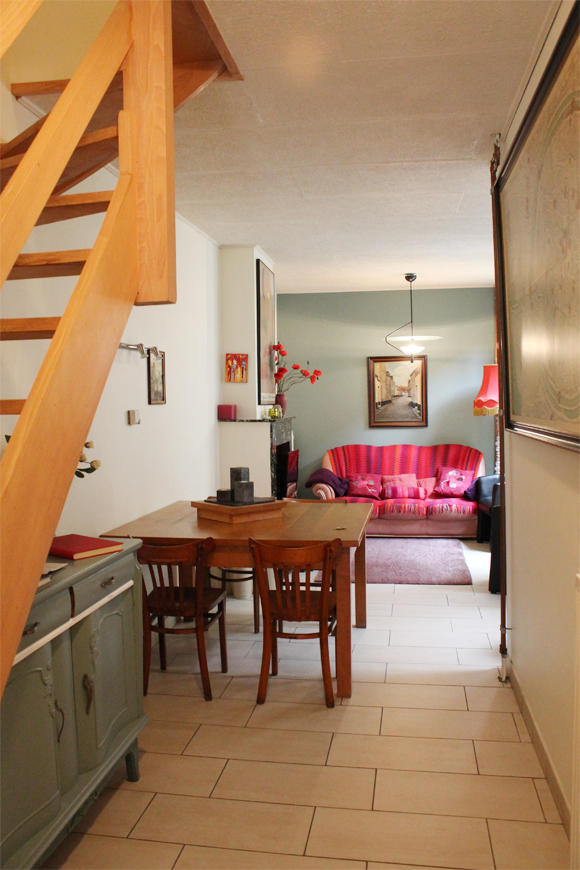
The upside to renting a vacation house and staying in the same spot for a few days is that each day the foreign city becomes more and more familiar. That, and you can make just as big of a mess as you would at home, without feeling guilty that housekeeping would come in the next morning and silently judge you for leaving your dirty clothes in a heap on the floor. But I digress.

Architecture like this is a surefire way to know that you are in Bruges. The roofs sloping to the sides and not to the front/back, combined with the cute stair-stepped effect, creates such a quaint look! When we were there, the city was packed, and I mean PACKED with tourists. This detracted from the quaintness, but only by like 1%. So I still totally recommend this city for a weekend visit for anyone planning a Eurotrip of their own, at any time of the year.
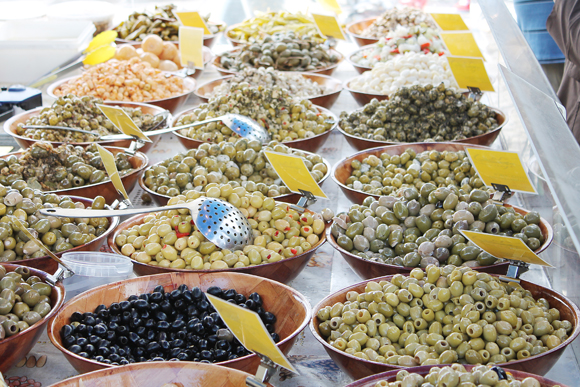
On Saturday morning, in a normally empty square (‘t Zand) there is a market including fish, meat, pastries, bread, olives (above), eggs, cheese, etc. Also sold are clothes, socks, toys… basically, the sky is the limit. I have seen markets like this before and didn’t fall for the “cheap” poorly made clothing items but was fascinated by the food offered. Doug in particular was struck by the “buy-your-meat-in-the-street” aspect (having grown up in a family meat retail business). This market shoud not to be confused with the Markt, another square nestled deeper in the city, where a reportedly more charming and tourist-friendly market is held on Wednesdays (we were not in Bruges on Wednesday to confirm or deny this).
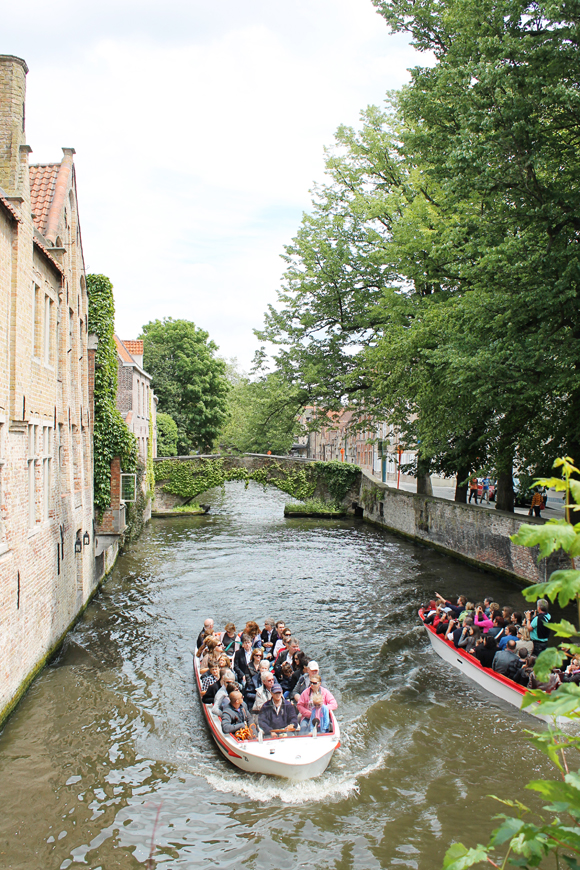
Saturday we walked along a tourist-packed shopping street and got some lace, for which Bruges is famous. My mother got a piece to go with the one she had purchased back in 1984. For lunch we all got waffles from a food truck parked in the Markt. Mine was good, but Doug’s had ice cream and was better. I snagged some of his ice cream for mine, gobbled it down and watched him struggle with his rapidly-melting mess. I laughed (but then provided him with a wet wipe). After lunch we took a boat tour: I highly recommend getting the full tourist experience by taking a canal tour. We were really impressed by our guide, a college-aged student who rattled off facts in Flemish, French, and English; My dad was lucky enough to sit in the front of the boat near him and got bonus “insider info” mentioned to him in between the scripted tidbits.
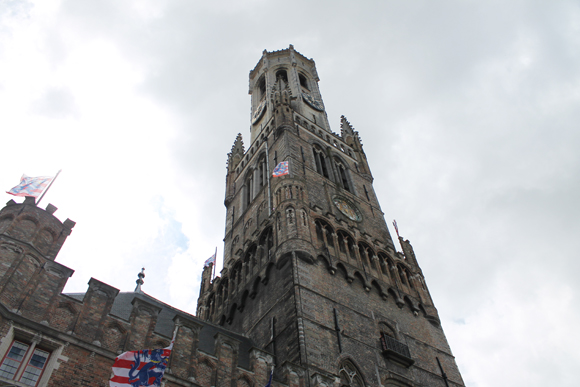
The city has four towers–many old European cities have more than one cathedral or tall building, but the handy thing about Bruges is that all of them were built in drastically different styles, making it really easy to use them for triangulation–it’s a lot harder to get lost this way! The one above was especially unique, in my opinion (it also stands out to me since it was featured in In Bruges). Unfortunately, we were unable to climb to the top for a view of the city, since we arrived too late in the day.
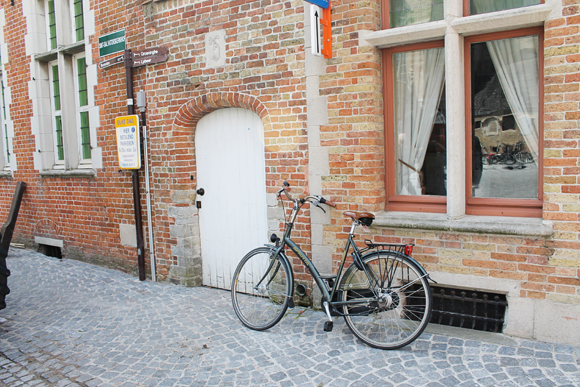
Exploring the city by bike would have been amazing! Instead, I snapped a photo of this one… I love the competing color and texture of red brick and gray cobblestones.
Sunday, which was Father’s Day, my mom had a paper to write for grad school so we absconded with my dad and visited Brussels. I am glad that we visited Brussels, especially the famous Grand Place (below) but I’m VERY happy we decided to make it a day trip and stay in Bruges. My overall impression of Brussels was that it was dirty. The Grand Place was breathtaking, though. Three sides of the square (it would have been four, but one large building was undergoing renovation/restoration) were ornately decorated and gold-leafed. It was hard to pick out the most gorgeous building–it was hard even knowing where to look. I would have loved to see this square in its glory days a few hundred years ago, or during August when they make a “carpet” for the inner section of the square with flowers in intricate designs!
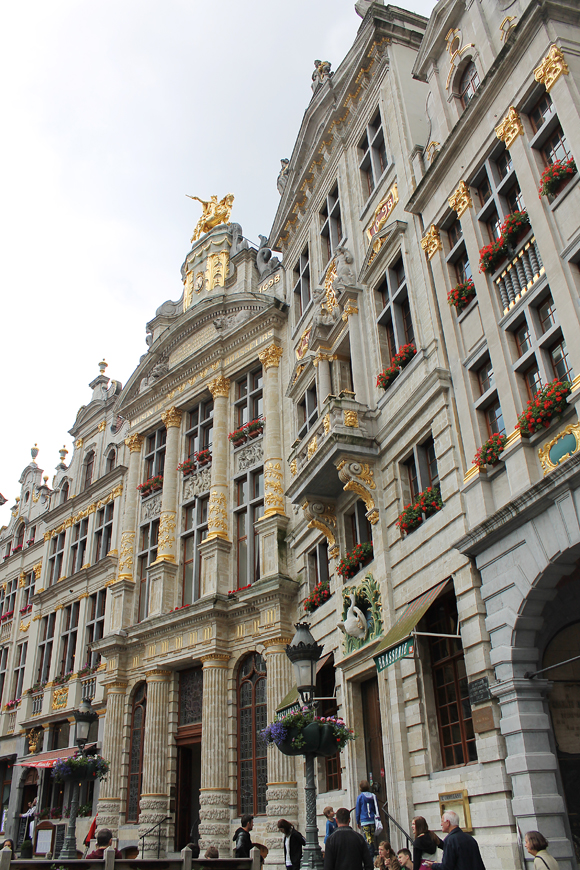
We walked down a street lined with restaurants all offering the exact same thing: a three-course meal for €12,50. We chose a restaurant… Actually, the host dragged us in off the street with his smooth-talking ways. When we sat down at the pre-set table, our plates were dirty and we were having second thoughts. The plates turned out to be just for show, as the table was cleared when we placed our order and when the food finally came out, everything seemed clean. A note, however: Remember how I mentioned the “restaurants” were all offering the same thing? Well, our food didn’t come from the back of the restaurant (where we assumed the kitchen was) but from a different shopfront on the street. It seems as if all the food for the restaurants surrounding us was from the same place. We don’t know the facts, but this is what it seemed like. Anyway, the salad and entree were good and dessert consisted of another Belgian waffle (not as good as the one from Saturday).
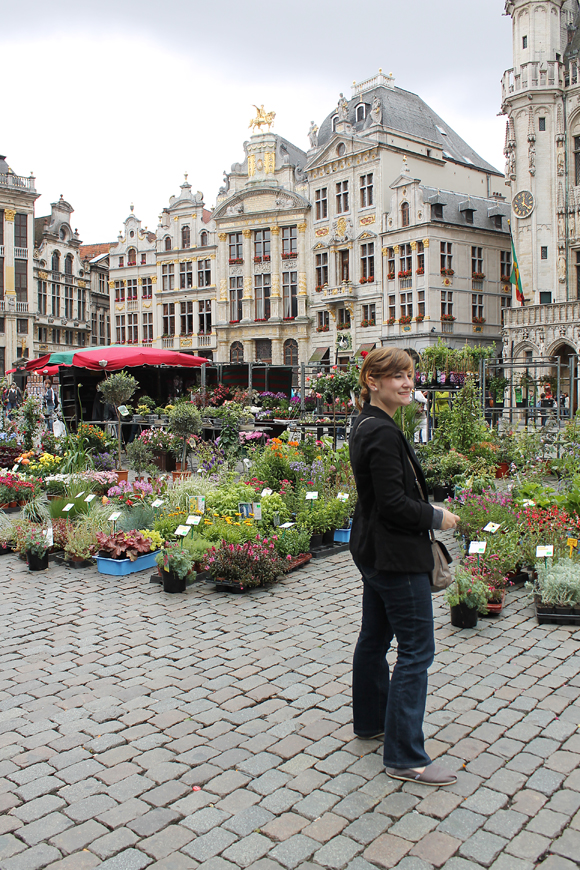
All in all, Brussels certainly was a change of pace from Bruges, but we were pleased to take the train (one hour each direction, €14,90 round trip, by the way) back to our “home” in quaint and peaceful Bruges.
And one more note: People in the north part of Belgium speak Flemish, and in the south part speak French. In planning your own trip, be sure to research both spellings of Bruges/Brugge and Brussels/Bruxelles. You’ll find more information this way!
You can catch part one here, and my next Eurotrip post will cover Paris! I’d like to do an overall wrap up of my impressions after that, so if you have any questions please feel free to ask!


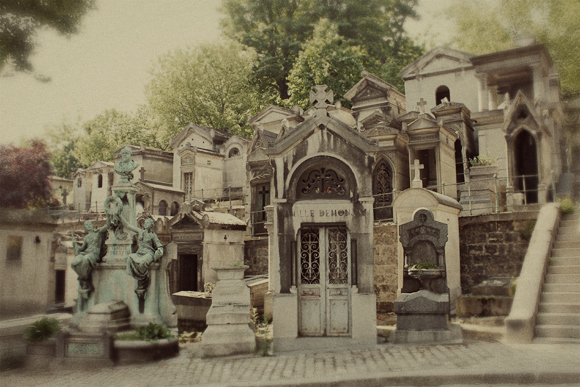



 My Friend Staci